
Back
Led a team of 4 across product, design, and development to build and scale an AI-powered quiz builder for lead generation. Along the way, I helped shape the product strategy, created a consistent UX and UI standard across the company’s website and applications, and worked hands-on designing screens, flows, and interactions that improved key end-to-end experiences.
CPO / Product Design Lead
4 people
AI SaaS
16 months
Project background
genlead.ai was built to help publishers and digital businesses grow audience and revenue more sustainably. Through competitive analysis and benchmarking, it became clear that most tools focused only on lead capture, while the bigger challenge was turning one-time visitors into recurring connections without constantly increasing traffic acquisition costs. The market lacked an integrated solution that combined intelligent lead capture, personalized quizzes, and ongoing omnichannel engagement in one platform. With a global market of over 2 million publishers, the opportunity was to help businesses retain users, increase engagement, and maximize content monetization over time.
My Role
I helped shape the product vision by defining the concept of a lead generation and nurture ecosystem for genlead.ai. I also created the product process the company followed throughout the project, setting up workflows and boards in Azure DevOps, orchestrating cross-functional collaboration across product, design, and development, and helping teams move with more clarity and consistency.
Alongside that, I worked hands-on in product strategy, user flows, screens, and key end-to-end experiences, while creating consistent UX and UI patterns that could scale across all products.

Discovery
Defined priorities, roadmap direction, and opportunities based on business goals and market gaps.
Since the product was going to be built from scratch, I knew getting the foundations right would be critical.
Stakeholders interview
Ran an iterative discovery process alongside stakeholders to better understand the business goals and expectations for the product.
Users interview
Ran user interviews with people already familiar with this type of platform to understand what users would expect from the experience.
Outcome
Brought those two perspectives together, translating business needs and user expectations into a clear product strategy.

key insight
Early interviews showed that quiz load speed had a direct impact on user experience, so we built our rendering infrastructure around fast and seamless performance from day one.

Ideation
Defined early flows, technical foundations, and a scalable quiz structure.
Once the strategy was clear, it was time to turn ideas into something tangible and help the team decide how we would actually build the product. I started wireframing the first key flows while working closely with the team on technical decisions that would shape the foundation of the application.
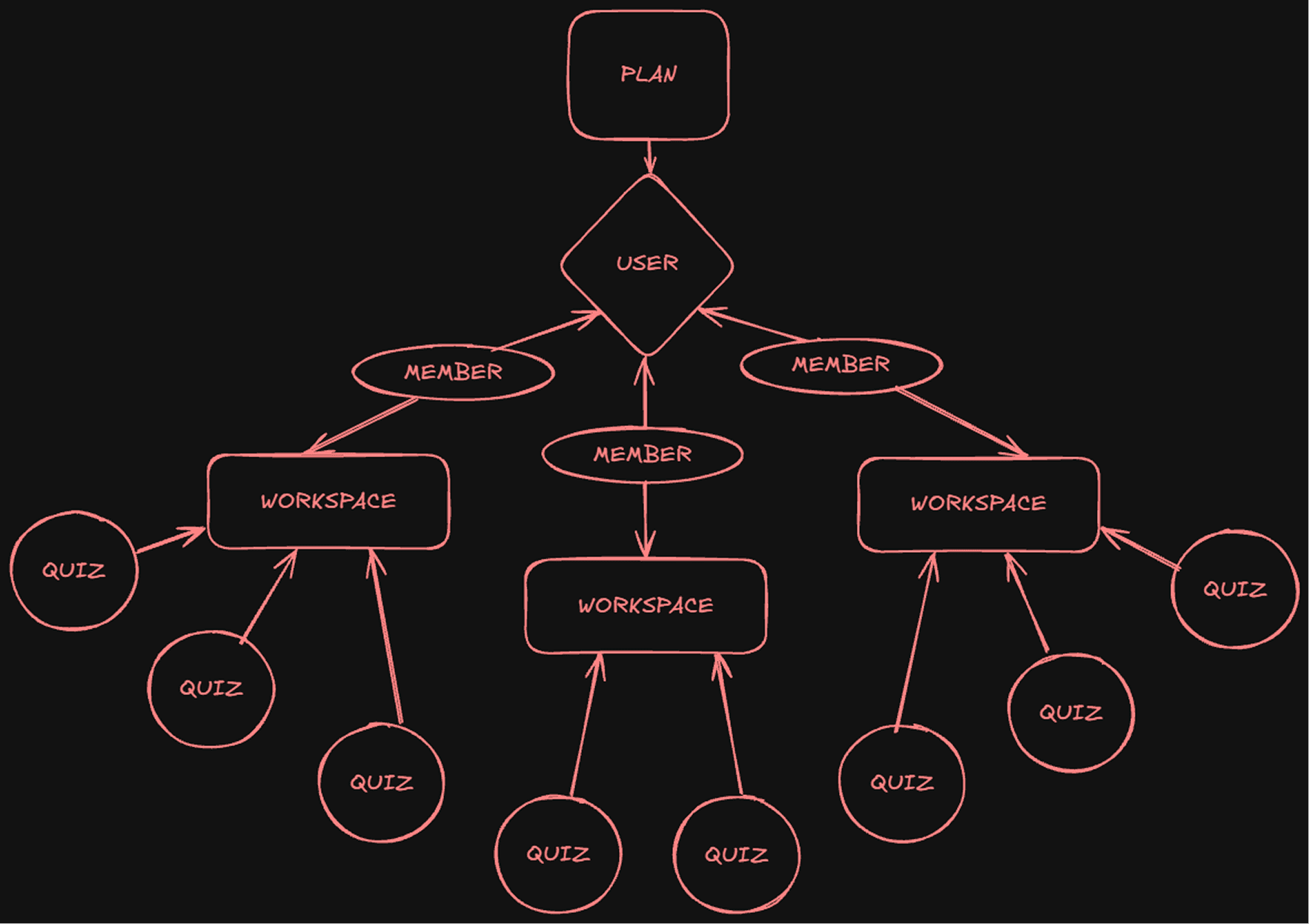
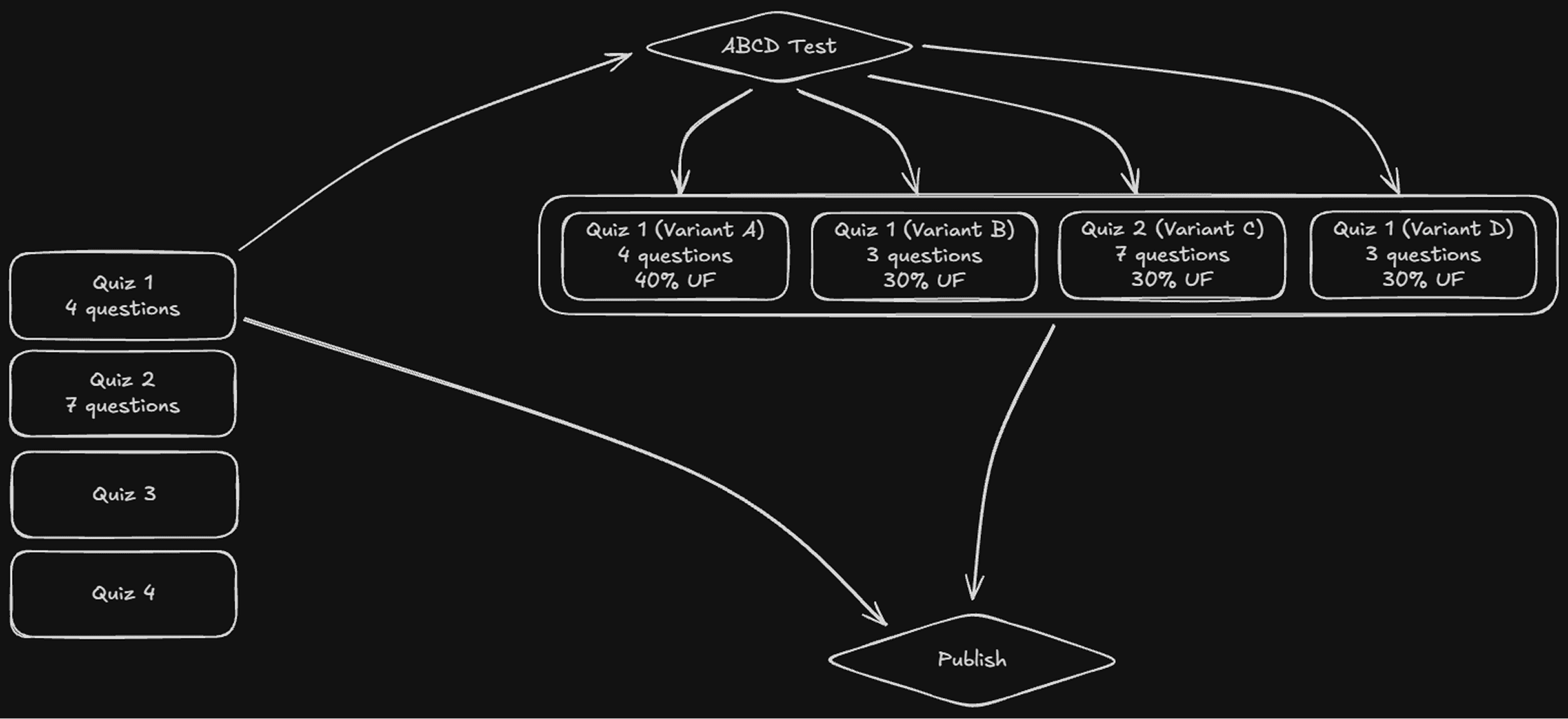
Since we chose Angular for the front-end, we decided to use a prebuilt design system, PrimeNG, to speed up the development process and help us move faster in the early stages. Alongside the developers, I also helped define the core structure for how quizzes would be created, stored, and published, always thinking ahead about how users would interact with the platform as it scaled.

prototype
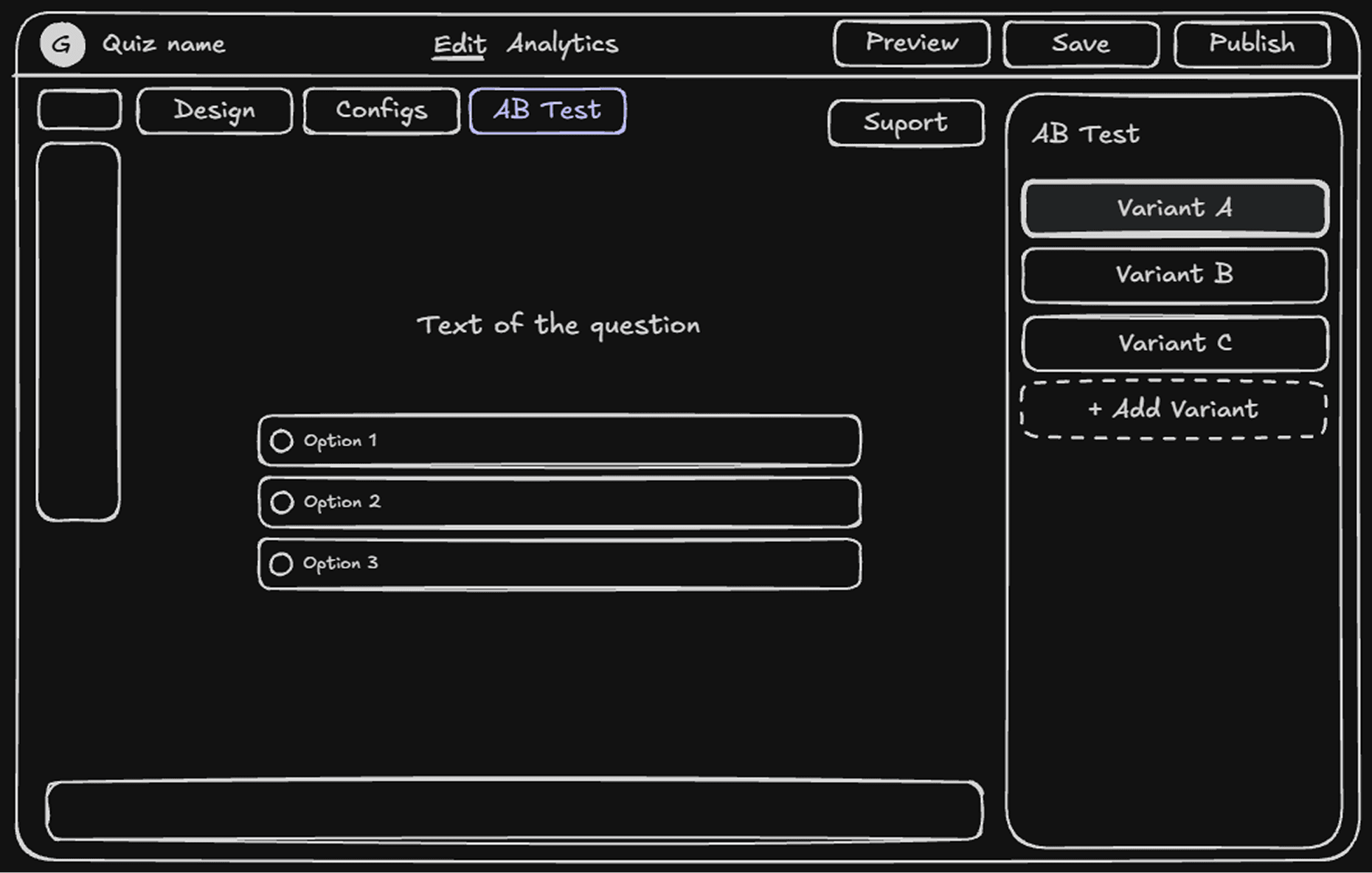
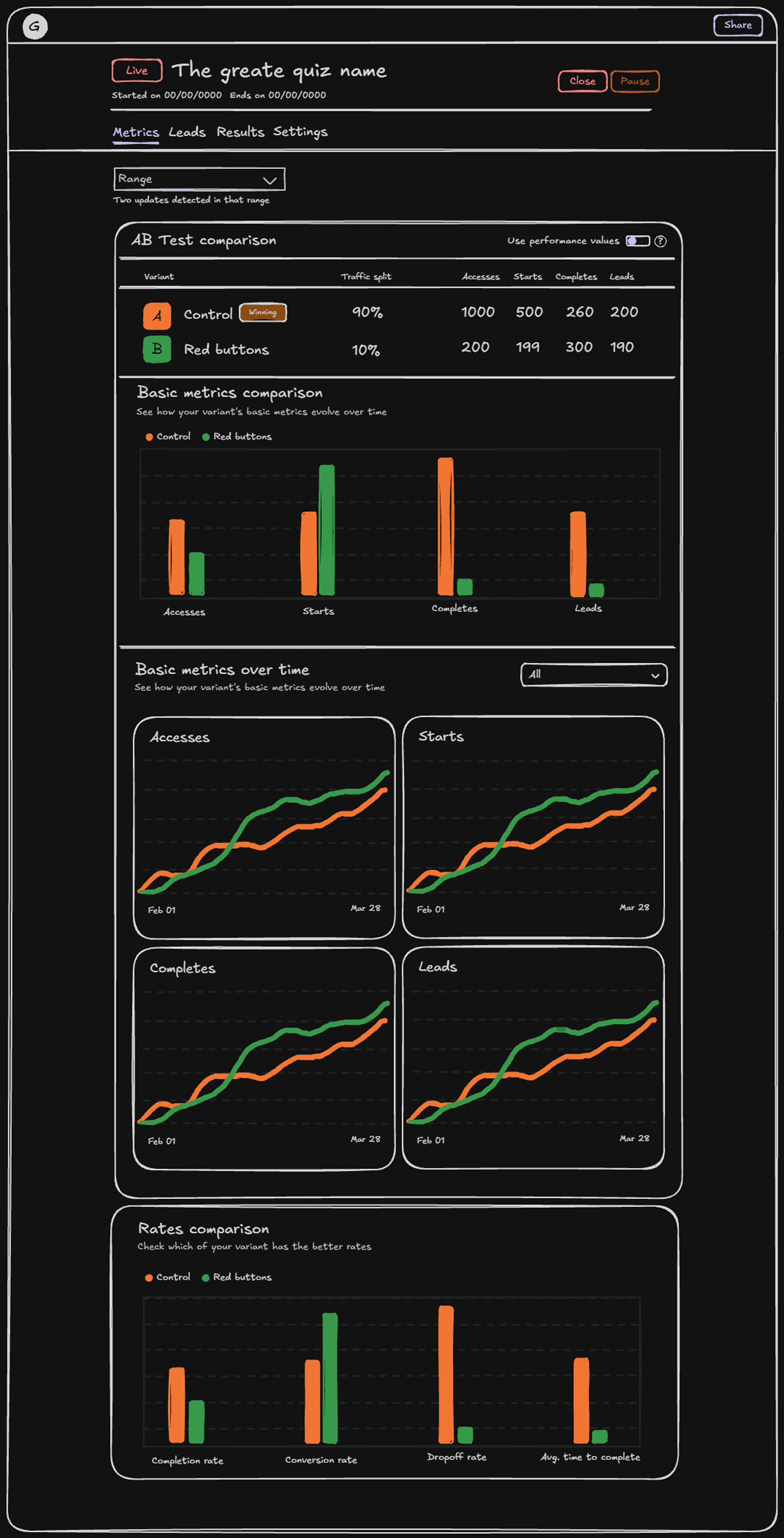
Used low and high-fidelity prototypes to validate flows, refine ideas, and define product direction.
low fidelity
Exploring how the quiz editor should be structured and how users would interact with it.
high fidelity
Defined the structure of the quiz builder based on insights gathered from the low-fidelity version.
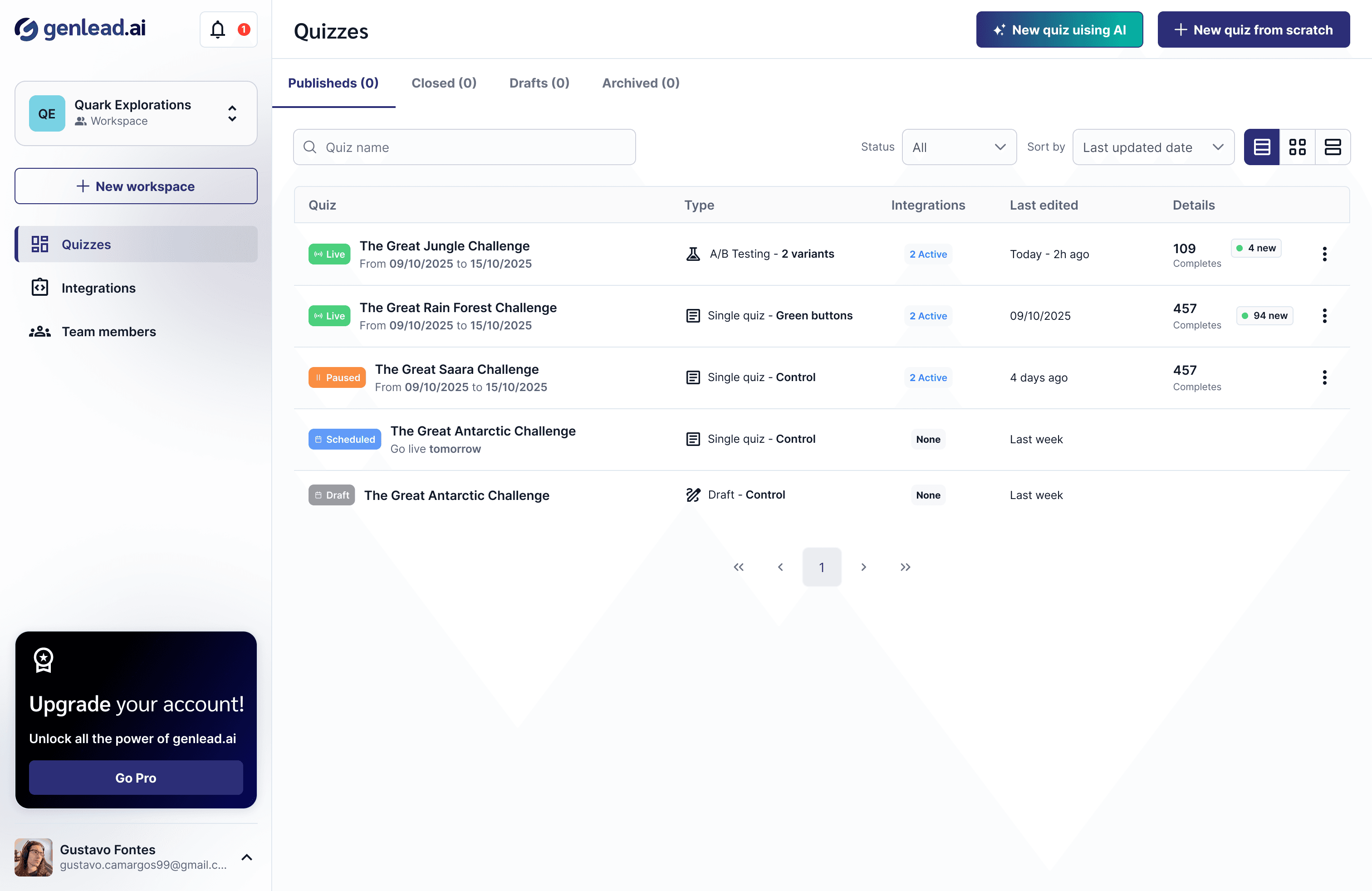
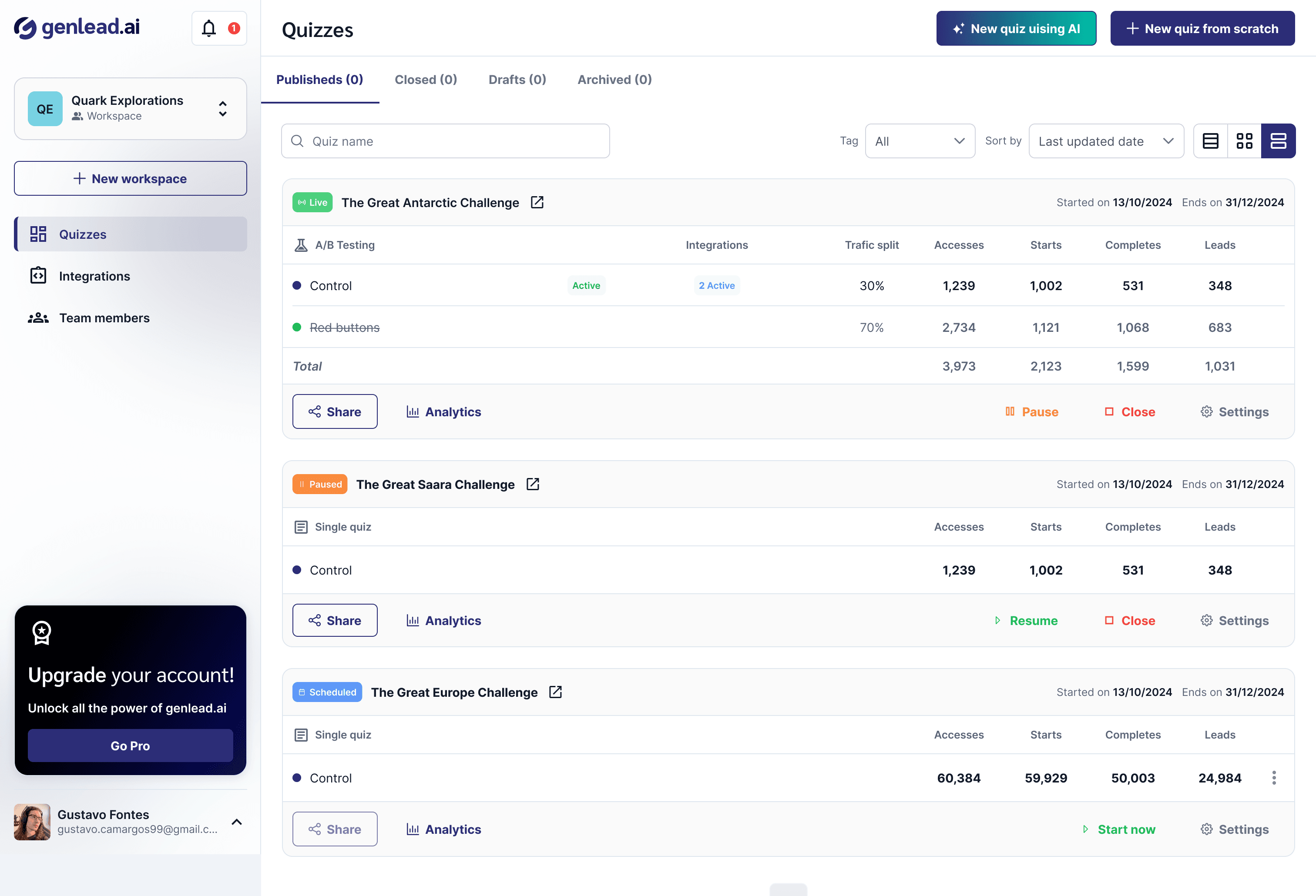
quizzes dashboard
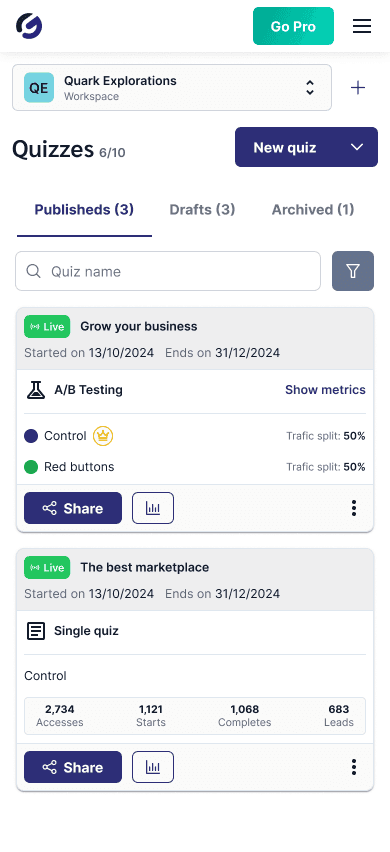
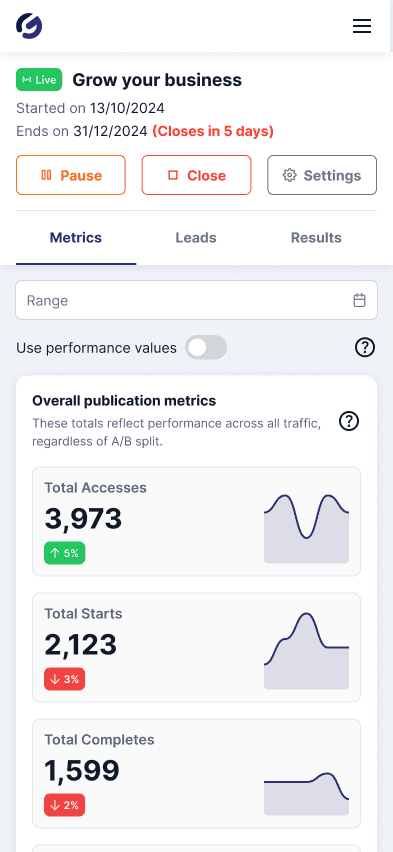
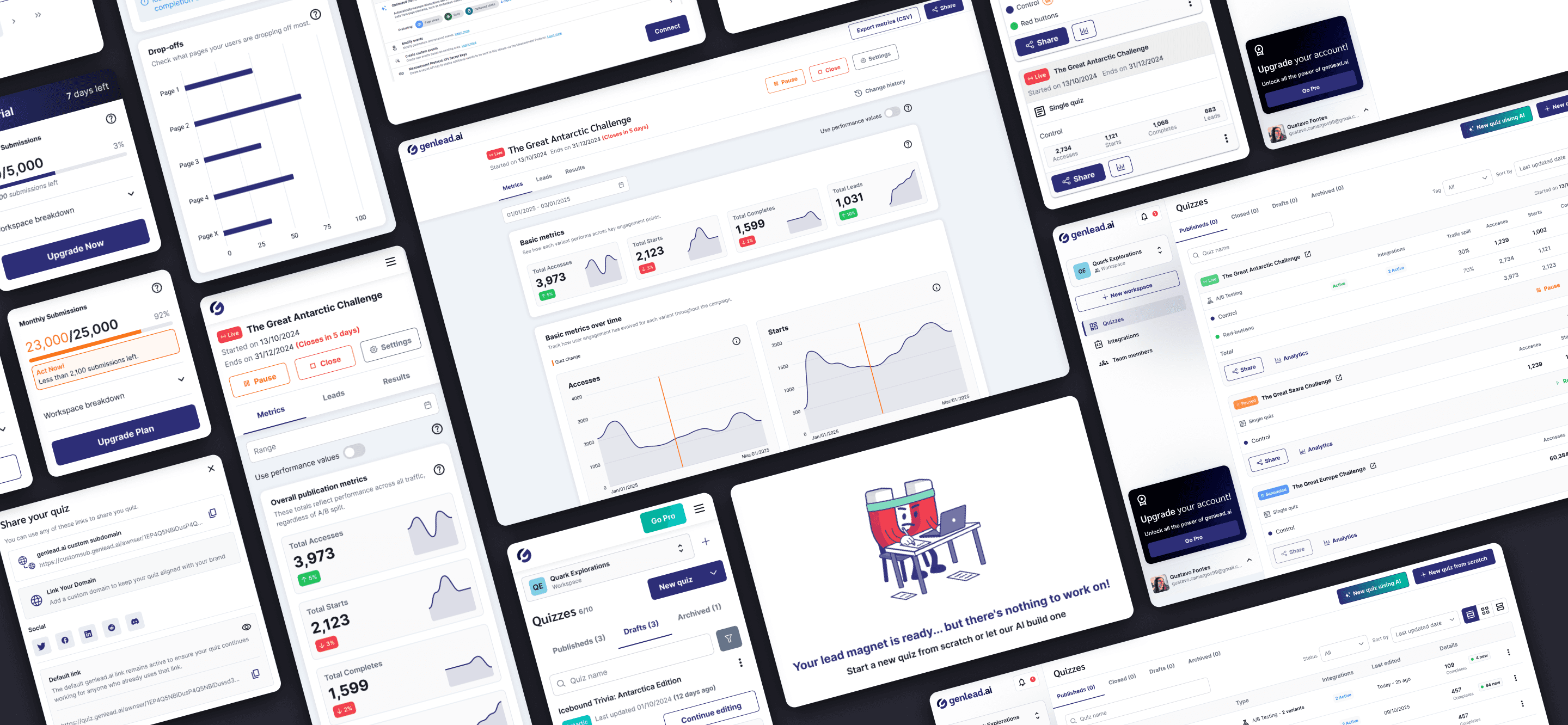
While designing the dashboard where users could manage their quizzes, I identified an opportunity to improve on what competitors were offering. None of them provided a detailed performance view, even though user interviews showed that quick access to quiz results was important. To solve that, I introduced a detailed view mode that made key metrics easier to scan and compare at a glance.
I also made the selected view persist between sessions, so users would always return to their preferred layout. It was a small detail, but one that created a smoother and more consistent experience.
Responsiveness
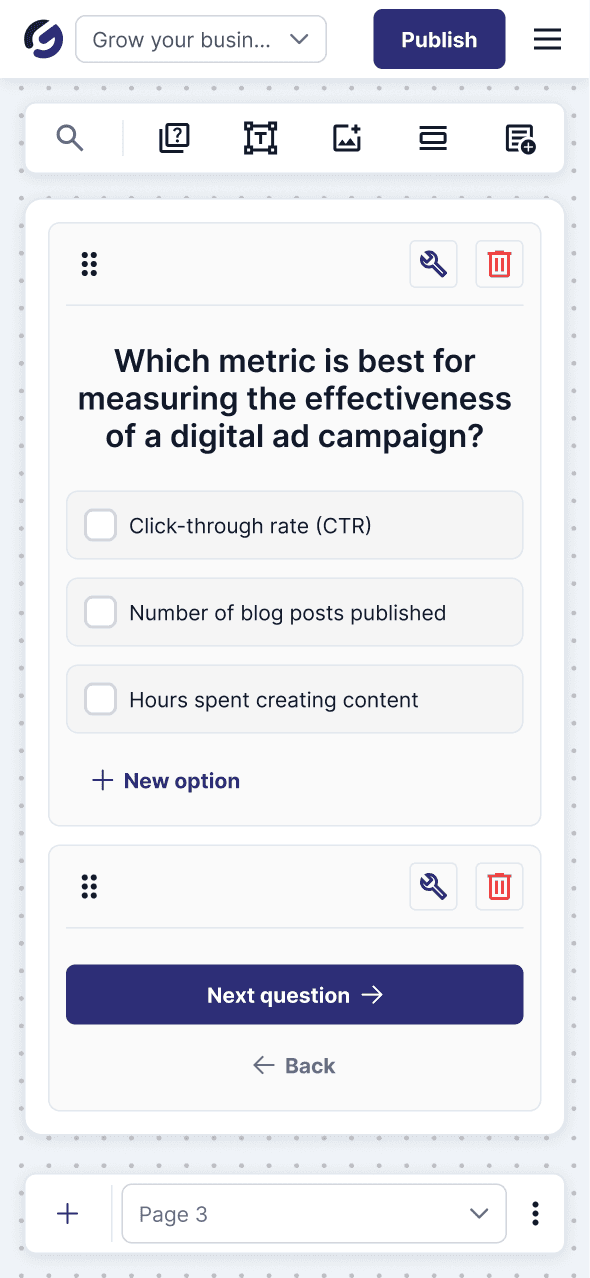
Another gap I identified was responsive support, since competitor editors were built mainly for desktop. I designed a responsive version of our editor, rethinking the drag-and-drop interactions for mobile and keeping the experience fluid across devices.